Around 4,000 years ago, ancient Mesopotamia thrived as a paragon of advanced society. Although historians and archaeologists are only beginning to learn about this progressive civilization that existed centuries before our time, a Babylonian math textbook, an astronomical clay tablet, and the Code of Hammurabi are surviving legacies that serve as reminders of the important contributions Mesopotamians made to modern society. Despite the fall of ancient Mesopotamia and its people, these artifacts represent important discoveries and ideologies that continue to impact our lives and our understanding of this once great civilization.
Babylonian Math Textbook
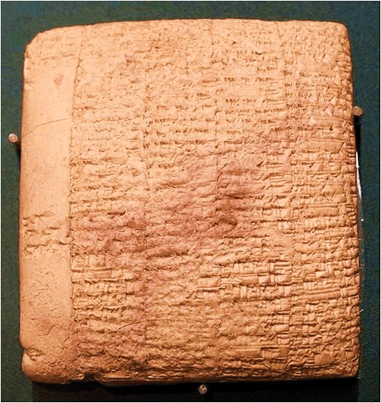
Fig. 1: A Babylonian math textbook.[1]
This Babylonian math textbook will be used to represent some important mathematical advancements made in Mesopotamia. The complex sexagesmial numbering system was discovered in the 3rd millennium BC by ancient Sumerians.[2] The number 60 was most likely chosen because it is a highly composite base that allows many fractions involving sexagesimal digits to be simplified.[3] It was used to simplify financial transactions, and calculations related to trade, and in various mathematical applications.[4] Its most significant use however, was undoubtedly for the calculations of the 60- second minute, the 60-minute hour, and the 24 hour day.[5] Ancient Mesopotamians also discovered various arithmetic-computation strategies that are used across the modern world today. They utilized pre-calculated tables which contained lists of the squares, cubes, and reciprocals of numbers to discover multiplication, division, addition, and subtraction.[6] Much like us, they also taught these simple computation methods in schools and used them across various sectors.[7] Finally, Babylonian geometry encompassed knowledge of the metric properties of complex polygons, the common rules for calculating volumes and areas, and information relating to calculations of the circumference and diameter of the circle including a highly accurate value of pi.[8] These same geometric methods are still used in various real life applications, including in the manufacture of containers, for land measurement, and in the creation of artwork.[9] The discovery of time, arithmetic computation methods, and various discoveries in the field of geometry are the most important mathematical legacies made by the Mesopotamian people, as these advances improved the quality of life for countless future civilizations and continue to do so even today.
BM40054
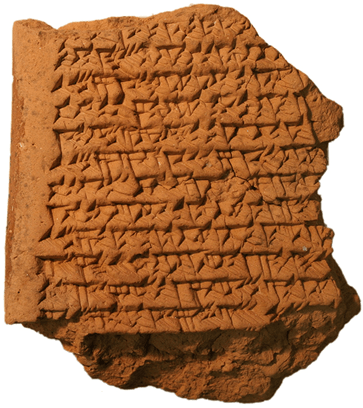
Fig. 2: An ancient Babylonian clay tablet describing the time- velocity of Jupiter.[10]
Next, the astronomical clay tablet named BM40054 will be utilized to represent three of the most significant astronomical discoveries made by Mesopotamians. Babylonian astronomical calculations and findings were advanced for their time as they involved the use of sophisticated mathematical calculations to create time- velocity graphs and charts that tracked the movement of planets with masterly precision.[11] The study of celestial bodies was an important aspect of Mesopotamian life, as priests predicted the will of their gods and told horoscopes for newborns by interpreting planetary movements and star positions.[12] In order to expand their knowledge in the field of astronomy, Babylonians kept detailed records of the rising and setting of the stars, the movement of planets, solar and lunar eclipses, and comet sightings.[13] These ancient astrologers identified and named many constellations and created a zodiac that was later integrated into Greek and Roman astrology.[14] Current information states that the Mesopotamians identified 18 constellations among the stars but later focused on the 12 most prominent ones.[15] They also named and tracked planets, as well as predicted celestial events.[16] According to historians, Babylonian astrologers recognized 5 planets: Jupiter, Venus, Saturn, Mercury, and Mars.[17] They even devised a unique method for measuring the area under a curve and applied it to calculate the time and velocity of Jupiter as well as its position in the sky.[18] Until the unearthing of BM40054, this method was believed to of have originated in 14th century Europe.[19] Babylonians also used the Saros Cycle composed of 223 synodic months to predict celestial events such as eclipses and comets.[20] The earliest known record of a solar eclipse was found on a tablet dating back to 1375 BC Mesopotamia, while another details an event when Halley’s Comet passed by in 168 BCE.[21]
Finally, ancient Mesopotamian astrologers are also credited with discovering the solar-luni calendar used around the world today.[22] By combining their knowledge of astrology and calendars, Babylonian scholars were able to accurately determine that there are 365 days in one year, 12 months in each year according to the moon’s revolutions around the earth, and an average of 29.53 days per month.[23] The development of the modern day calendar was important as it helped them keep track of the agricultural cycle and predict seasons with more accuracy.[24] Because everything in ancient Mesopotamia revolved around religion, the months and days of the week were named after local gods and varied in each city, until King Hammurabi established a standard calendar.[25] Their knowledge of stars, planets and celestial events, and the discovery of the modern calendar were the most important astronomical legacies of Mesopotamia as they effectively preserve and communicate the scientific advancements made by this ancient civilization.
The Code of Hammurabi
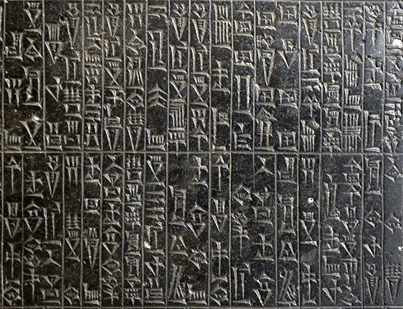
Fig.3: Lines from the Code of Hammurabi. [26]
Lastly, the Code of Hammurabi will be used to represent the most significant Mesopotamian legacy of written laws. This Babylonian code of law was created in around 1754 BC, and contains 282 statements that are recognized as the most complete set of laws known to date.[27] Its significance is derived from the fact that it a revolutionary text that forever impacted the way society would govern itself. Firstly, the Code of Hammurabi is different from other laws at the time because it presented a set of written laws that addressed people of all classes.[28] Edicts range from family law to professional contracts and administrative law.[29] Although it is regarded as one of the earliest examples of the phrase “an eye for an eye“ the Code also states than an accused person is innocent until proven guilty.[30] These laws were also highly effective at maintaining justice, order and stability in ancient Mesopotamia. By prescribing harsh punishments and financial penalties for breaking the law, the King had essentially set up a judicial system that facilitated the process of ruling over large territory where civil wars and in fighting between tribes was common. Harsh penalties are extremely effective at reducing crime, which is why modern governments around the world continue to administer them although in different ways. Finally, King Hammurabi`s laws were designed to protect the rights of weak and vulnerable minorities and treated men and women fairly in many aspects.[31] Hammurabi swears in his oath as King to “… bring about righteousness in the land, to destroy the wicked and the evil doers; so that the strong should not harm the weak…“[32] His words were reflected in his laws as they protected widows and children from being harmed or exploited.[33] It even grants women the rights to run their own businesses, work for pay, buy and sell property, and obtain divorces, which shows how advanced ancient Mesopotamia was when it came to women`s rights compared to other civilizations at the time.[34] In ancient Rome for example, women could not officially obtain divorces and even lost ownership over their property upon marriage.[35] Furthermore, King Hammurabi’s laws also outlined the wages to be paid for labourers and did not discriminate on the basis of gender.[36] Unlike the ancient Babylonian edicts, our laws are fair and indiscriminate for the most part, but it is a sad reality that unlike the Mesopotamian labour law that established equal pay for equal work, many women today are paid less than men across various industries despite holding the same positions. By establishing a set of written laws that applied to everyone, utilizing harsh penalties to maintain order and justice, and by protecting the rights of women and minorities, the Code of Hammurabi serves as the most noteworthy Mesopotamian legacy that is still relevant in the modern world.
Conclusion
The Babylonian math textbook, the scientific tablet known as BM40057, and the Code of Hammurabi are the most historically significant examples of Mesopotamian legacies as each artifact is a reminder of the important mathematical, astronomical, and legal milestones achieved by this civilization. But what makes these legacies exceptionally remarkable is that they have been used and developed by countless other generations and still impact us thousands of years after their discoveries.
[1] “Babylonian Math Textbook,” Facts and Details, accessed March 18, 2020, http://factsanddetails.com/world/cat56/sub402/entry-6083.html.
[2] “Sexagesimal,” Wikipedia, last modified March 12, 2020, https://en.wikipedia.org/wiki/Sexagesimal.
[3] “Sexagesimal,” Wikipedia, last modified March 12, 2020, https://en.wikipedia.org/wiki/Sexagesimal.
[4] “Sexagesimal,” Wikipedia, last modified March 12, 2020, https://en.wikipedia.org/wiki/Sexagesimal.
[5] “Sexagesimal,” Wikipedia, last modified March 12, 2020, https://en.wikipedia.org/wiki/Sexagesimal.
[6] “Babylonian Mathematics,” Wikipedia, last modified March 12, 2020, https://en.wikipedia.org/wiki/Babylonian_mathematics.
[7] “Babylonian Mathematics,” Wikipedia, last modified March 12, 2020, https://en.wikipedia.org/wiki/Babylonian_mathematics.
[8] Christine Proust, “Mathematics in Mesopotamia: From Elementary Education to Erudition,” Institute for Advanced Study, accessed March 18, 2020, https://www.ias.edu/ideas/2010/proust-mesopotamian-mathematics.
[9] “Babylonian Mathematics,” Wikipedia, last modified March 12, 2020, https://en.wikipedia.org/wiki/Babylonian_mathematics.
[10] Mathieu Ossendrijver, “Ancient Babylonian Tablet Describing Jupiter’s Time- Velocity,” Physics World, accessed March 18, 2020, https://physicsworld.com/a/babylonian-astronomers-used-abstract-geometry-to-track-jupiter/.
[11] Sarah Roberts, “Babylonian Astrology: How Mesopotamian Priests Influenced Your Horoscope,” Ancient Origins, last modified October 7, 2018, https://www.ancient-origins.net/history-ancient-traditions/babylonian-astrology-0010806.
[12] Sarah Roberts, “Babylonian Astrology: How Mesopotamian Priests Influenced Your Horoscope,” Ancient Origins, last modified October 7, 2018, https://www.ancient-origins.net/history-ancient-traditions/babylonian-astrology-0010806.
[13] Sarah Roberts, “Babylonian Astrology: How Mesopotamian Priests Influenced Your Horoscope,” Ancient Origins, last modified October 7, 2018, https://www.ancient-origins.net/history-ancient-traditions/babylonian-astrology-0010806.
[14] Sarah Roberts, “Babylonian Astrology: How Mesopotamian Priests Influenced Your Horoscope,” Ancient Origins, last modified October 7, 2018, https://www.ancient-origins.net/history-ancient-traditions/babylonian-astrology-0010806.
[15] Sarah Roberts, “Babylonian Astrology: How Mesopotamian Priests Influenced Your Horoscope,” Ancient Origins, last modified October 7, 2018, https://www.ancient-origins.net/history-ancient-traditions/babylonian-astrology-0010806.
[16] Sarah Roberts, “Babylonian Astrology: How Mesopotamian Priests Influenced Your Horoscope,” Ancient Origins, last modified October 7, 2018, https://www.ancient-origins.net/history-ancient-traditions/babylonian-astrology-0010806.
[17] Sarah Roberts, “Babylonian Astrology: How Mesopotamian Priests Influenced Your Horoscope,” Ancient Origins, last modified October 7, 2018, https://www.ancient-origins.net/history-ancient-traditions/babylonian-astrology-0010806.
[18] Rebecca Morelle, “Ancient Babylonians ‘first to use geometry,’” BBC, last modified January 29, 2016, https://www.bbc.com/news/science-environment-35431974.
[19] Rebecca Morelle, “Ancient Babylonians ‘first to use geometry,’” BBC, last modified January 29, 2016, https://www.bbc.com/news/science-environment-35431974.
[20] Ruth Schuster, “Ancient Babylonians Knew Secrets of the Solar System 1,500 Years Before Europe,” Haaretz, last modified January 29, 2016, https://www.haaretz.com/archaeology/babylonians-knew-celestial-secrets-1-500y-before-europe-1.5396854.
[21] Ruth Schuster, “Ancient Babylonians Knew Secrets of the Solar System 1,500 Years Before Europe,” Haaretz, last modified January 29, 2016, https://www.haaretz.com/archaeology/babylonians-knew-celestial-secrets-1-500y-before-europe-1.5396854.
[22] Judson Knight, “The Calendar Takes Shape in Mesopotamia,” Encyclopedia, last modified March 10, 2020, https://www.encyclopedia.com/science/encyclopedias-almanacs-transcripts-and-maps/calendar-takes-shape-mesopotamia.
[23] Judson Knight, “The Calendar Takes Shape in Mesopotamia,” Encyclopedia, last modified March 10, 2020, https://www.encyclopedia.com/science/encyclopedias-almanacs-transcripts-and-maps/calendar-takes-shape-mesopotamia.
[24] Judson Knight, “The Calendar Takes Shape in Mesopotamia,” Encyclopedia, last modified March 10, 2020, https://www.encyclopedia.com/science/encyclopedias-almanacs-transcripts-and-maps/calendar-takes-shape-mesopotamia.
[25] Judson Knight, “The Calendar Takes Shape in Mesopotamia,” Encyclopedia, last modified March 10, 2020, https://www.encyclopedia.com/science/encyclopedias-almanacs-transcripts-and-maps/calendar-takes-shape-mesopotamia.
[26] “Text from the Code of Hammurabi,” Travel to Eat, accessed March 18, 2020, https://traveltoeat.com/the-code-of-hammurabi/.
[27] “Code of Hammurabi,” History, last modified February 21, 2020, https://www.history.com/topics/ancient-history/hammurabi.
[28] “Code of Hammurabi,” History, last modified February 21, 2020, https://www.history.com/topics/ancient-history/hammurabi.
[29] “Code of Hammurabi,” History, last modified February 21, 2020, https://www.history.com/topics/ancient-history/hammurabi.
[30] “Code of Hammurabi,” History, last modified February 21, 2020, https://www.history.com/topics/ancient-history/hammurabi.
[31] “Hammurabi’s Code: An Eye for An Eye,” UShistory.org, last modified March 20, 2020, //www.ushistory.org/civ/4c.asp.
[32] “Hammurabi’s Code: An Eye for An Eye,” UShistory.org, last modified March 20, 2020, //www.ushistory.org/civ/4c.asp.
[33] “Hammurabi’s Code: An Eye for An Eye,” UShistory.org, last modified March 20, 2020, //www.ushistory.org/civ/4c.asp.
[34] “Hammurabi’s Code: An Eye for An Eye,” UShistory.org, last modified March 20, 2020, //www.ushistory.org/civ/4c.asp.
[35] “The Roman Empire in the First Century,” PBS, accessed March 18, 2020, https://www.pbs.org/empires/romans/empire/women.html.
[36] “Code of Hammurabi,” Wikipedia, last modified March 19, 2020, https://en.wikipedia.org/wiki/Code_of_Hammurabi.
Bibliography
“Babylonian Math Textbook.” Facts and Detail. Accessed March 18, 2020. http://factsanddetails.com/world/cat56/sub402/entry-6083.html.
“Babylonian Mathematics.” Wikipedia. Last modified March 12, 2020. https://en.wikipedia.org/wiki/Babylonian_mathematics.
“Code of Hammurabi.” History. Last modified February 21, 2020. https://www.history.com/topics/ancient-history/hammurabi.
“Code of Hammurabi.” Wikipedia. Last modified March 19, 2020. https://en.wikipedia.org/wiki/Code_of_Hammurabi.
Daniel Mansfield and Norman Wildberger. “Written in Stone: The World’s First Trigonometry Revealed in an Ancient Babylonian Tablet.” The Conversation. Last modified August 24 2017. https://theconversation.com/written-in-stone-the-worlds-first-trigonometry- revealed-in-an-ancient-babylonian-tablet-81472.
“Hammurabi’s Code: An Eye for An Eye.” UShistory.org. Last modified March 20, 2020. //www.ushistory.org/civ/4c.asp.
Knight, Judson. “The Calendar Takes Shape in Mesopotamia.” Encyclopedia. Last modified March 10, 2020. https://www.encyclopedia.com/science/encyclopedias-almanacs- transcripts-and-maps/calendar-takes-shape-mesopotamia.
Morelle, Rebecca. “Ancient Babylonians ‘first to use geometry.’” BBC. Last modified January 29, 2016. https://www.bbc.com/news/science-environment-35431974.
Ossendrijver, Mathieu.“Ancient Babylonian Tablet Describing Jupiter’s Time- Velocity.” Physics World. Accessed March 18, 2020. https://physicsworld.com/a/babylonian- astronomers-used-abstract-geometry-to-track-jupiter/.
Proust, Christine. “Mathematics in Mesopotamia: From Elementary Education to Erudition.” Institute for Advanced Study. Accessed March 18, 2020. https://www.ias.edu/ideas/2010/proust-mesopotamian-mathematics.
Roberts, Sarah. “Babylonian Astrology: How Mesopotamian Priests Influenced Your Horoscope.” Ancient Origins. Last modified October 7, 2018. https://www.ancient- origins.net/history-ancient-traditions/babylonian-astrology-0010806.
“Sexagesimal.” Wikipedia. Last modified March 12, 2020. https://en.wikipedia.org/wiki/Sexagesimal.
Schuster, Ruth. “Ancient Babylonians Knew Secrets of the Solar System 1,500 Years Before Europe.” Haaretz. Last modified January 29, 2016. https://www.haaretz.com/archaeology/babylonians-knew-celestial-secrets-1-500y-before- europe-1.5396854.
“Text from the Code of Hammurabi.” Travel to Eat. Accessed March 18, 2020. https://traveltoeat.com/the-code-of-hammurabi/.
“The Roman Empire in the First Century.” PBS. Accessed March 18, 2020. https://www.pbs.org/empires/romans/empire/women.html.
 Mesopotamia