Be yourself; Everyone else is already taken.
— Oscar Wilde.
This is the first post on my new blog. I’m just getting this new blog going, so stay tuned for more. Subscribe below to get notified when I post new updates.
Be yourself; Everyone else is already taken.
— Oscar Wilde.
This is the first post on my new blog. I’m just getting this new blog going, so stay tuned for more. Subscribe below to get notified when I post new updates.
Around 4,000 years ago, ancient Mesopotamia thrived as a paragon of advanced society. Although historians and archaeologists are only beginning to learn about this progressive civilization that existed centuries before our time, a Babylonian math textbook, an astronomical clay tablet, and the Code of Hammurabi are surviving legacies that serve as reminders of the important contributions Mesopotamians made to modern society. Despite the fall of ancient Mesopotamia and its people, these artifacts represent important discoveries and ideologies that continue to impact our lives and our understanding of this once great civilization.
Babylonian Math Textbook
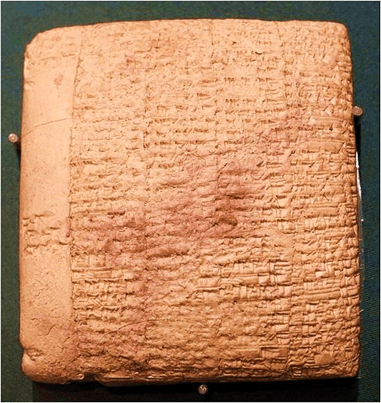
Fig. 1: A Babylonian math textbook.[1]
This Babylonian math textbook will be used to represent some important mathematical advancements made in Mesopotamia. The complex sexagesmial numbering system was discovered in the 3rd millennium BC by ancient Sumerians.[2] The number 60 was most likely chosen because it is a highly composite base that allows many fractions involving sexagesimal digits to be simplified.[3] It was used to simplify financial transactions, and calculations related to trade, and in various mathematical applications.[4] Its most significant use however, was undoubtedly for the calculations of the 60- second minute, the 60-minute hour, and the 24 hour day.[5] Ancient Mesopotamians also discovered various arithmetic-computation strategies that are used across the modern world today. They utilized pre-calculated tables which contained lists of the squares, cubes, and reciprocals of numbers to discover multiplication, division, addition, and subtraction.[6] Much like us, they also taught these simple computation methods in schools and used them across various sectors.[7] Finally, Babylonian geometry encompassed knowledge of the metric properties of complex polygons, the common rules for calculating volumes and areas, and information relating to calculations of the circumference and diameter of the circle including a highly accurate value of pi.[8] These same geometric methods are still used in various real life applications, including in the manufacture of containers, for land measurement, and in the creation of artwork.[9] The discovery of time, arithmetic computation methods, and various discoveries in the field of geometry are the most important mathematical legacies made by the Mesopotamian people, as these advances improved the quality of life for countless future civilizations and continue to do so even today.
BM40054
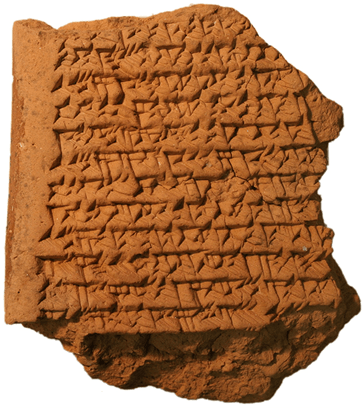
Fig. 2: An ancient Babylonian clay tablet describing the time- velocity of Jupiter.[10]
Next, the astronomical clay tablet named BM40054 will be utilized to represent three of the most significant astronomical discoveries made by Mesopotamians. Babylonian astronomical calculations and findings were advanced for their time as they involved the use of sophisticated mathematical calculations to create time- velocity graphs and charts that tracked the movement of planets with masterly precision.[11] The study of celestial bodies was an important aspect of Mesopotamian life, as priests predicted the will of their gods and told horoscopes for newborns by interpreting planetary movements and star positions.[12] In order to expand their knowledge in the field of astronomy, Babylonians kept detailed records of the rising and setting of the stars, the movement of planets, solar and lunar eclipses, and comet sightings.[13] These ancient astrologers identified and named many constellations and created a zodiac that was later integrated into Greek and Roman astrology.[14] Current information states that the Mesopotamians identified 18 constellations among the stars but later focused on the 12 most prominent ones.[15] They also named and tracked planets, as well as predicted celestial events.[16] According to historians, Babylonian astrologers recognized 5 planets: Jupiter, Venus, Saturn, Mercury, and Mars.[17] They even devised a unique method for measuring the area under a curve and applied it to calculate the time and velocity of Jupiter as well as its position in the sky.[18] Until the unearthing of BM40054, this method was believed to of have originated in 14th century Europe.[19] Babylonians also used the Saros Cycle composed of 223 synodic months to predict celestial events such as eclipses and comets.[20] The earliest known record of a solar eclipse was found on a tablet dating back to 1375 BC Mesopotamia, while another details an event when Halley’s Comet passed by in 168 BCE.[21]
Finally, ancient Mesopotamian astrologers are also credited with discovering the solar-luni calendar used around the world today.[22] By combining their knowledge of astrology and calendars, Babylonian scholars were able to accurately determine that there are 365 days in one year, 12 months in each year according to the moon’s revolutions around the earth, and an average of 29.53 days per month.[23] The development of the modern day calendar was important as it helped them keep track of the agricultural cycle and predict seasons with more accuracy.[24] Because everything in ancient Mesopotamia revolved around religion, the months and days of the week were named after local gods and varied in each city, until King Hammurabi established a standard calendar.[25] Their knowledge of stars, planets and celestial events, and the discovery of the modern calendar were the most important astronomical legacies of Mesopotamia as they effectively preserve and communicate the scientific advancements made by this ancient civilization.
The Code of Hammurabi
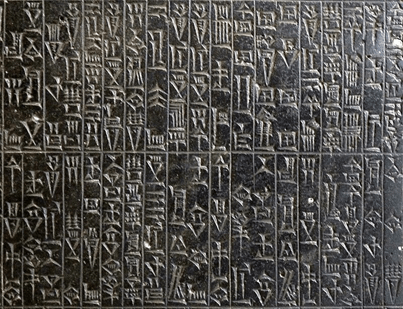
Fig.3: Lines from the Code of Hammurabi. [26]
Lastly, the Code of Hammurabi will be used to represent the most significant Mesopotamian legacy of written laws. This Babylonian code of law was created in around 1754 BC, and contains 282 statements that are recognized as the most complete set of laws known to date.[27] Its significance is derived from the fact that it a revolutionary text that forever impacted the way society would govern itself. Firstly, the Code of Hammurabi is different from other laws at the time because it presented a set of written laws that addressed people of all classes.[28] Edicts range from family law to professional contracts and administrative law.[29] Although it is regarded as one of the earliest examples of the phrase “an eye for an eye“ the Code also states than an accused person is innocent until proven guilty.[30] These laws were also highly effective at maintaining justice, order and stability in ancient Mesopotamia. By prescribing harsh punishments and financial penalties for breaking the law, the King had essentially set up a judicial system that facilitated the process of ruling over large territory where civil wars and in fighting between tribes was common. Harsh penalties are extremely effective at reducing crime, which is why modern governments around the world continue to administer them although in different ways. Finally, King Hammurabi`s laws were designed to protect the rights of weak and vulnerable minorities and treated men and women fairly in many aspects.[31] Hammurabi swears in his oath as King to “… bring about righteousness in the land, to destroy the wicked and the evil doers; so that the strong should not harm the weak…“[32] His words were reflected in his laws as they protected widows and children from being harmed or exploited.[33] It even grants women the rights to run their own businesses, work for pay, buy and sell property, and obtain divorces, which shows how advanced ancient Mesopotamia was when it came to women`s rights compared to other civilizations at the time.[34] In ancient Rome for example, women could not officially obtain divorces and even lost ownership over their property upon marriage.[35] Furthermore, King Hammurabi’s laws also outlined the wages to be paid for labourers and did not discriminate on the basis of gender.[36] Unlike the ancient Babylonian edicts, our laws are fair and indiscriminate for the most part, but it is a sad reality that unlike the Mesopotamian labour law that established equal pay for equal work, many women today are paid less than men across various industries despite holding the same positions. By establishing a set of written laws that applied to everyone, utilizing harsh penalties to maintain order and justice, and by protecting the rights of women and minorities, the Code of Hammurabi serves as the most noteworthy Mesopotamian legacy that is still relevant in the modern world.
Conclusion
The Babylonian math textbook, the scientific tablet known as BM40057, and the Code of Hammurabi are the most historically significant examples of Mesopotamian legacies as each artifact is a reminder of the important mathematical, astronomical, and legal milestones achieved by this civilization. But what makes these legacies exceptionally remarkable is that they have been used and developed by countless other generations and still impact us thousands of years after their discoveries.
[1] “Babylonian Math Textbook,” Facts and Details, accessed March 18, 2020, http://factsanddetails.com/world/cat56/sub402/entry-6083.html.
[2] “Sexagesimal,” Wikipedia, last modified March 12, 2020, https://en.wikipedia.org/wiki/Sexagesimal.
[3] “Sexagesimal,” Wikipedia, last modified March 12, 2020, https://en.wikipedia.org/wiki/Sexagesimal.
[4] “Sexagesimal,” Wikipedia, last modified March 12, 2020, https://en.wikipedia.org/wiki/Sexagesimal.
[5] “Sexagesimal,” Wikipedia, last modified March 12, 2020, https://en.wikipedia.org/wiki/Sexagesimal.
[6] “Babylonian Mathematics,” Wikipedia, last modified March 12, 2020, https://en.wikipedia.org/wiki/Babylonian_mathematics.
[7] “Babylonian Mathematics,” Wikipedia, last modified March 12, 2020, https://en.wikipedia.org/wiki/Babylonian_mathematics.
[8] Christine Proust, “Mathematics in Mesopotamia: From Elementary Education to Erudition,” Institute for Advanced Study, accessed March 18, 2020, https://www.ias.edu/ideas/2010/proust-mesopotamian-mathematics.
[9] “Babylonian Mathematics,” Wikipedia, last modified March 12, 2020, https://en.wikipedia.org/wiki/Babylonian_mathematics.
[10] Mathieu Ossendrijver, “Ancient Babylonian Tablet Describing Jupiter’s Time- Velocity,” Physics World, accessed March 18, 2020, https://physicsworld.com/a/babylonian-astronomers-used-abstract-geometry-to-track-jupiter/.
[11] Sarah Roberts, “Babylonian Astrology: How Mesopotamian Priests Influenced Your Horoscope,” Ancient Origins, last modified October 7, 2018, https://www.ancient-origins.net/history-ancient-traditions/babylonian-astrology-0010806.
[12] Sarah Roberts, “Babylonian Astrology: How Mesopotamian Priests Influenced Your Horoscope,” Ancient Origins, last modified October 7, 2018, https://www.ancient-origins.net/history-ancient-traditions/babylonian-astrology-0010806.
[13] Sarah Roberts, “Babylonian Astrology: How Mesopotamian Priests Influenced Your Horoscope,” Ancient Origins, last modified October 7, 2018, https://www.ancient-origins.net/history-ancient-traditions/babylonian-astrology-0010806.
[14] Sarah Roberts, “Babylonian Astrology: How Mesopotamian Priests Influenced Your Horoscope,” Ancient Origins, last modified October 7, 2018, https://www.ancient-origins.net/history-ancient-traditions/babylonian-astrology-0010806.
[15] Sarah Roberts, “Babylonian Astrology: How Mesopotamian Priests Influenced Your Horoscope,” Ancient Origins, last modified October 7, 2018, https://www.ancient-origins.net/history-ancient-traditions/babylonian-astrology-0010806.
[16] Sarah Roberts, “Babylonian Astrology: How Mesopotamian Priests Influenced Your Horoscope,” Ancient Origins, last modified October 7, 2018, https://www.ancient-origins.net/history-ancient-traditions/babylonian-astrology-0010806.
[17] Sarah Roberts, “Babylonian Astrology: How Mesopotamian Priests Influenced Your Horoscope,” Ancient Origins, last modified October 7, 2018, https://www.ancient-origins.net/history-ancient-traditions/babylonian-astrology-0010806.
[18] Rebecca Morelle, “Ancient Babylonians ‘first to use geometry,’” BBC, last modified January 29, 2016, https://www.bbc.com/news/science-environment-35431974.
[19] Rebecca Morelle, “Ancient Babylonians ‘first to use geometry,’” BBC, last modified January 29, 2016, https://www.bbc.com/news/science-environment-35431974.
[20] Ruth Schuster, “Ancient Babylonians Knew Secrets of the Solar System 1,500 Years Before Europe,” Haaretz, last modified January 29, 2016, https://www.haaretz.com/archaeology/babylonians-knew-celestial-secrets-1-500y-before-europe-1.5396854.
[21] Ruth Schuster, “Ancient Babylonians Knew Secrets of the Solar System 1,500 Years Before Europe,” Haaretz, last modified January 29, 2016, https://www.haaretz.com/archaeology/babylonians-knew-celestial-secrets-1-500y-before-europe-1.5396854.
[22] Judson Knight, “The Calendar Takes Shape in Mesopotamia,” Encyclopedia, last modified March 10, 2020, https://www.encyclopedia.com/science/encyclopedias-almanacs-transcripts-and-maps/calendar-takes-shape-mesopotamia.
[23] Judson Knight, “The Calendar Takes Shape in Mesopotamia,” Encyclopedia, last modified March 10, 2020, https://www.encyclopedia.com/science/encyclopedias-almanacs-transcripts-and-maps/calendar-takes-shape-mesopotamia.
[24] Judson Knight, “The Calendar Takes Shape in Mesopotamia,” Encyclopedia, last modified March 10, 2020, https://www.encyclopedia.com/science/encyclopedias-almanacs-transcripts-and-maps/calendar-takes-shape-mesopotamia.
[25] Judson Knight, “The Calendar Takes Shape in Mesopotamia,” Encyclopedia, last modified March 10, 2020, https://www.encyclopedia.com/science/encyclopedias-almanacs-transcripts-and-maps/calendar-takes-shape-mesopotamia.
[26] “Text from the Code of Hammurabi,” Travel to Eat, accessed March 18, 2020, https://traveltoeat.com/the-code-of-hammurabi/.
[27] “Code of Hammurabi,” History, last modified February 21, 2020, https://www.history.com/topics/ancient-history/hammurabi.
[28] “Code of Hammurabi,” History, last modified February 21, 2020, https://www.history.com/topics/ancient-history/hammurabi.
[29] “Code of Hammurabi,” History, last modified February 21, 2020, https://www.history.com/topics/ancient-history/hammurabi.
[30] “Code of Hammurabi,” History, last modified February 21, 2020, https://www.history.com/topics/ancient-history/hammurabi.
[31] “Hammurabi’s Code: An Eye for An Eye,” UShistory.org, last modified March 20, 2020, //www.ushistory.org/civ/4c.asp.
[32] “Hammurabi’s Code: An Eye for An Eye,” UShistory.org, last modified March 20, 2020, //www.ushistory.org/civ/4c.asp.
[33] “Hammurabi’s Code: An Eye for An Eye,” UShistory.org, last modified March 20, 2020, //www.ushistory.org/civ/4c.asp.
[34] “Hammurabi’s Code: An Eye for An Eye,” UShistory.org, last modified March 20, 2020, //www.ushistory.org/civ/4c.asp.
[35] “The Roman Empire in the First Century,” PBS, accessed March 18, 2020, https://www.pbs.org/empires/romans/empire/women.html.
[36] “Code of Hammurabi,” Wikipedia, last modified March 19, 2020, https://en.wikipedia.org/wiki/Code_of_Hammurabi.
Bibliography
“Babylonian Math Textbook.” Facts and Detail. Accessed March 18, 2020. http://factsanddetails.com/world/cat56/sub402/entry-6083.html.
“Babylonian Mathematics.” Wikipedia. Last modified March 12, 2020. https://en.wikipedia.org/wiki/Babylonian_mathematics.
“Code of Hammurabi.” History. Last modified February 21, 2020. https://www.history.com/topics/ancient-history/hammurabi.
“Code of Hammurabi.” Wikipedia. Last modified March 19, 2020. https://en.wikipedia.org/wiki/Code_of_Hammurabi.
Daniel Mansfield and Norman Wildberger. “Written in Stone: The World’s First Trigonometry Revealed in an Ancient Babylonian Tablet.” The Conversation. Last modified August 24 2017. https://theconversation.com/written-in-stone-the-worlds-first-trigonometry- revealed-in-an-ancient-babylonian-tablet-81472.
“Hammurabi’s Code: An Eye for An Eye.” UShistory.org. Last modified March 20, 2020. //www.ushistory.org/civ/4c.asp.
Knight, Judson. “The Calendar Takes Shape in Mesopotamia.” Encyclopedia. Last modified March 10, 2020. https://www.encyclopedia.com/science/encyclopedias-almanacs- transcripts-and-maps/calendar-takes-shape-mesopotamia.
Morelle, Rebecca. “Ancient Babylonians ‘first to use geometry.’” BBC. Last modified January 29, 2016. https://www.bbc.com/news/science-environment-35431974.
Ossendrijver, Mathieu.“Ancient Babylonian Tablet Describing Jupiter’s Time- Velocity.” Physics World. Accessed March 18, 2020. https://physicsworld.com/a/babylonian- astronomers-used-abstract-geometry-to-track-jupiter/.
Proust, Christine. “Mathematics in Mesopotamia: From Elementary Education to Erudition.” Institute for Advanced Study. Accessed March 18, 2020. https://www.ias.edu/ideas/2010/proust-mesopotamian-mathematics.
Roberts, Sarah. “Babylonian Astrology: How Mesopotamian Priests Influenced Your Horoscope.” Ancient Origins. Last modified October 7, 2018. https://www.ancient- origins.net/history-ancient-traditions/babylonian-astrology-0010806.
“Sexagesimal.” Wikipedia. Last modified March 12, 2020. https://en.wikipedia.org/wiki/Sexagesimal.
Schuster, Ruth. “Ancient Babylonians Knew Secrets of the Solar System 1,500 Years Before Europe.” Haaretz. Last modified January 29, 2016. https://www.haaretz.com/archaeology/babylonians-knew-celestial-secrets-1-500y-before- europe-1.5396854.
“Text from the Code of Hammurabi.” Travel to Eat. Accessed March 18, 2020. https://traveltoeat.com/the-code-of-hammurabi/.
“The Roman Empire in the First Century.” PBS. Accessed March 18, 2020. https://www.pbs.org/empires/romans/empire/women.html.

Fig. 1: A depiction of ancient Mesopotamia during its peak.[1]
Many great ancient civilizations flourished in the region known as Mesopotamia; the land between two rivers. Renowned for their lavish architecture and advanced scientific discoveries that forever changed the way we live, the Mesopotamian people who lived thousands of years ago served as the epitome of civilization for countless empires and are still relevant today.[2] However, this great society with its rich culture and intellectual prowess started to decline centuries after its creation and became a forgotten part of history until the 1800s.[3] A cuneiform slab, the iron sword, and the clay tablet known as “Plimpton 322” are the artifacts that effectively communicate the most significant causes that led to the decline of this great ancient civilization. They have been chosen to represent the process of Mesopotamian languages passing into oblivion, a key power shift that took place in the region, and the negative impacts Greek Imperialism had on this civilization.
Cuneiform Slab
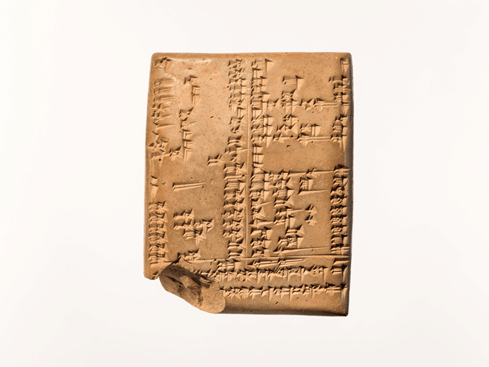
Fig. 2: Bilingual cuneiform clay tablet.[4]
The first contributor to the decline of this ancient civilization will be represented by a bilingual cuneiform slab that was unearthed by archaeologists in Mesopotamian ruins. The decline of the Sumerian and Akkadian languages began under the Assyrian Empire’s reign over Mesopotamia and continued throughout forthcoming Babylonian and Persian empires.[5] Being a language isolate that shared no genealogical relationship with any other ancient language, the cuneiform script was difficult and time consuming to learn.[6] Nonetheless, both spoken languages and cuneiform played important roles in Mesopotamian religion and were used at holy celebrations as well as in the composition of sacred texts.[7] However as the Assyrian Empire gained more influence throughout the Middle East and conquered Mesopotamia, Aramaic became the common language and replaced both Sumerian and Akkadian as the official language.[8] Unlike the complex cuneiform script which contained over 7,000 characters, Aramaic used an easy to learn alphabet that enabled it to prevail for millennia afterwards.[9] The decline of classical Mesopotamian languages and written script significantly contributed to the fall of this great civilization in the way that it resulted in the gradual loss of an important aspect of its unique cultural heritage.
Iron Sword
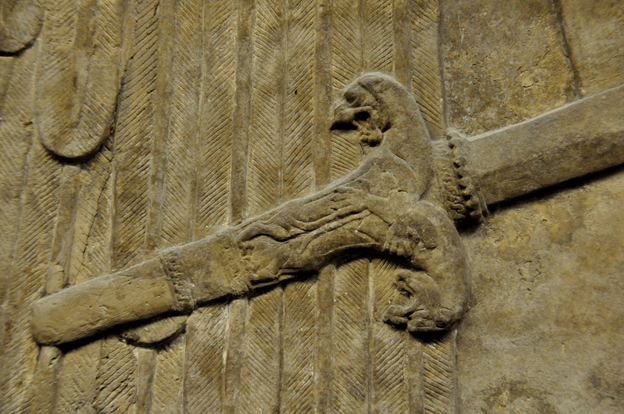
Fig. 3: Assyrian sword sheath.[10]
Then, the iron sword facilitated an important power shift in Mesopotamia that further accelerated the decline of this great civilization. Tyrannical kings enacted tough policies that altered established traditions and deployed their ruthless armies to take down anyone who rebelled against them.[11] The Assyrian Empire being a most notable example emerged from a militaristic society that maintained a standing army of thousands of professional soldiers, and used the iron sword in battles, which instantly gave them a distinct advantage over enemies.[12] Because retaining control over such a vast empire was a challenge in and of itself, conquered civilians were relocated within the Empire to reduce the chances of them forming rebel alliances.[13] Assyrian kings also built forts and roads throughout their territories to allow their armies to travel to troubled areas quickly and crush rebellions before they got out of hand.[14] Despite these efforts, the ruthlessness of most rulers and their warriors made it all too common for civil wars to erupt throughout the subjugated Mesopotamian region.[15] Internal conflict led to the destruction of iconic Mesopotamian buildings such as ziggurats, and many of the great cities it was famous for.[16] Assyrian rulers’ oppressive policies and violent responses to the concerns voiced by their subjugated population further contributed to the decline of ancient Mesopotamian civilization as innumerable irreplaceable cultural hallmarks were obliterated during this tumultuous era, and much of Mesopotamia’s rich cultural history was erased.
“Plimpton 322” Clay Tablet
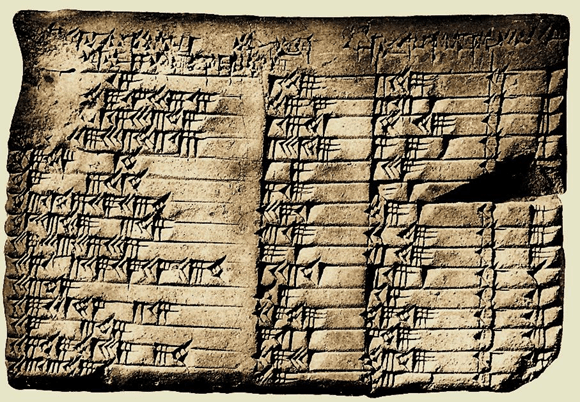
Fig. 4: “Plimpton 322.”[17]
Finally, Greek imperialism was the most significant factor that catalyzed the decline of Mesopotamia and its effects can be observed from examining the clay tablet known as “Plimpton 322”. By the time Alexander the Great of Macedonia had conquered Mesopotamia, there was not much left of the ancient civilization that had once flourished as the world’s cultural and commercial hub.[18] The subjugation of Mesopotamian people and oppressive policies of the Greek Empire including the enslavement of conquered civilians and the seizing of their property effectively contributed to the decline of this civilization as it not only stripped the Mesopotamians of their identity as a distinct society but also cast their rich heritage into oblivion.[19] As this civilization began to decline, its people culturally assimilated with the Greeks and were overshadowed by this new regional superpower.[20] Apart from losing their identity as a unique civilization, the work of Mesopotamian astronomers, scholars, scientists, and intellectuals was also not accredited by Greek intellectuals who plagiarized their advanced discoveries.[21] Modern historians argue however, that because the Greek Empire was made up of multicultural territories, it was only normal that Greek scholars and philosophers would “borrow knowledge” from Mesopotamian culture.[22] Although the term “borrow” is defined in this context as “to take (a word, idea, or method) from another source and use it in one’s own language or work“ many Greek scholars and intellectuals failed to accredit the Mesopotamian individuals whose work they “borrowed”.[23] A well known example is Greek mathematician Pythagoras who is accredited with discovering the Pythagorean Theorem which historians later found on a Babylonian clay tablet that was created 3,700 before Pythagoras’s time.[24] Despite being a clear act of plagiarism, public ignorance has resulted in us continuing to teach and believe that famous Greek scholars like Pythagoras who plagiarized Mesopotamian discoveries were indeed the true pioneers of such advanced concepts. By erasing the names of great Mesopotamian innovators and intellectuals from history through first assimilating Mesopotamians into Hellenistic culture and then plagiarizing their work, Greek Imperialism acted as the most significant factor leading to the decline of one of the greatest civilizations to of have ever existed.
Conclusion
The gradual disappearance of traditional Mesopotamian languages, an important power shift that took place in the region, and Greek imperialism were the most significant contributors to the decline of ancient Mesopotamian civilization, as they lead to the abandonment of important Mesopotamian traditions, the destruction of countless cultural monuments, and to the plagiarism of countless discoveries under Greek imperialists; most notably the Pythagorean Theorem. Despite its fall, the breakthroughs and inventions of this ancient civilization provided the framework upon which innumerable modern scientific and technological innovations have been made, and is why ancient Mesopotamia is still relevant thousands of years after its time.
[1] Deepan Kolad, “Hidden Objects Backgrounds,” Deepan Kolad Latheev, last modified March 11, 2014, https://deepankoladlatheev.blogspot.com/2014/03/blog-post_6161.html.
[2] “Whatever Happened to the Ancient Mesopotamians,” TimeMaps, accessed March 10, 2020, https://www.timemaps.com/blog/whatever-happened-to-ancient-mesopotamian-civilization/.
[3] “Assyrian Empire,” Age of Empires, Microsoft, accessed March 10, 2020, https://www.ageofempires.com/history/assyrian-culture/.
[4] Creative Commons, “Bilingual Cuneiform Tablet,” Met Museum, accessed March 13, 2020, https://www.metmuseum.org/art/collection/search/321677.
[5] “Whatever Happened to the Ancient Mesopotamians,” TimeMaps, accessed March 10, 2020, https://www.timemaps.com/blog/whatever-happened-to-ancient-mesopotamian-civilization/.
[6] Joshua J. Mark, “Cuneiform,” Ancient History Encyclopedia, last modified March 15, 2018, https://www.ancient.eu/cuneiform/.
[7] “Whatever Happened to the Ancient Mesopotamians,” TimeMaps, accessed March 10, 2020, https://www.timemaps.com/blog/whatever-happened-to-ancient-mesopotamian-civilization/.
[8] “Whatever Happened to the Ancient Mesopotamians,” TimeMaps, accessed March 10, 2020, https://www.timemaps.com/blog/whatever-happened-to-ancient-mesopotamian-civilization/.
[9] “Whatever Happened to the Ancient Mesopotamians,” TimeMaps, accessed March 10, 2020, https://www.timemaps.com/blog/whatever-happened-to-ancient-mesopotamian-civilization/.
[10] Osama S. M. Amin, “Assyrian Sword Sheath,” Ancient History Encyclopedia, last modified September 13, 2015. https://www.ancient.eu/image/4072/assyrian-sword-sheath/.
[11] Nelson Ken, “Ancient Mesopotamia: Assyrian Army and Warriors,” Ducksters, Technological Solutions Inc., accessed March 10, 2020, https://www.ducksters.com/history/mesopotamia/assyrian_army.php.
[12] Nelson Ken, “Ancient Mesopotamia: Assyrian Army and Warriors,” Ducksters, Technological Solutions Inc., accessed March 10, 2020, https://www.ducksters.com/history/mesopotamia/assyrian_army.php.
[13] Nelson Ken, “Ancient Mesopotamia: Assyrian Army and Warriors,” Ducksters, Technological Solutions Inc., accessed March 10, 2020, https://www.ducksters.com/history/mesopotamia/assyrian_army.php.
[14] Nelson Ken, “Ancient Mesopotamia: Assyrian Empire,” Ducksters, Technological Solutions Inc., accessed March 10, 2020, https://www.ducksters.com/history/mesopotamia/assyrian_empire.php.
[15] “Assyrian Empire,” Age of Empires, Microsoft, accessed March 10, 2020, https://www.ageofempires.com/history/assyrian-culture/.
[16] “Whatever Happened to the Ancient Mesopotamians,” TimeMaps, accessed March 10, 2020, https://www.timemaps.com/blog/whatever-happened-to-ancient-mesopotamian-civilization/.
[17] Bill Casselman, “The Babylonian Tablet ‘Plimpton 322,’” Math UBC, accessed March 13, 2020, https://www.math.ubc.ca/~cass/courses/m446-03/pl322/pl322.html#refs.
[18] “Whatever Happened to the Ancient Mesopotamians,” TimeMaps, accessed March 10, 2020, https://www.timemaps.com/blog/whatever-happened-to-ancient-mesopotamian-civilization/.
[19] “Whatever Happened to the Ancient Mesopotamians,” TimeMaps, accessed March 10, 2020, https://www.timemaps.com/blog/whatever-happened-to-ancient-mesopotamian-civilization/.
[20] “Whatever Happened to the Ancient Mesopotamians,” TimeMaps, accessed March 10, 2020, https://www.timemaps.com/blog/whatever-happened-to-ancient-mesopotamian-civilization/.
[21] “Mysterious Clay Tablet Reveals Babylonians Used Trigonometry 1,000 Years before Pythagoras,” Ancient Pages, last modified August 24, 2017, http://www.ancientpages.com/2017/08/24/mysterious-clay-tablet-reveals-babylonians-used-trigonometry-1000-years-pythagoras/.
[22] Charlotte Higgins, “Ancient Greece, the Middle East, and An Ancient Cultural Internet,” The Guardian, Guardian News and Media Limited, last modified July 11, 2013, https://www.theguardian.com/education/2013/jul/11/ancient-greece-cultural-hybridisation-theory.
[23] “Mysterious Clay Tablet Reveals Babylonians Used Trigonometry 1,000 Years before Pythagoras,” Ancient Pages, last modified August 24, 2017, http://www.ancientpages.com/2017/08/24/mysterious-clay-tablet-reveals-babylonians-used-trigonometry-1000-years-pythagoras/.
[24] “Mysterious Clay Tablet Reveals Babylonians Used Trigonometry 1,000 Years before Pythagoras,” Ancient Pages, last modified August 24, 2017, http://www.ancientpages.com/2017/08/24/mysterious-clay-tablet-reveals-babylonians-used-trigonometry-1000-years-pythagoras/.
Bibliography
1. Amin, Osama S. M. “Assyrian Sword Sheath.” Ancient History Encyclopedia. Last modified September 13, 2015.https://www.ancient.eu/image/4072/assyrian- sword- sheath/.
2. “Assyrian Empire.” Age of Empire. Microsoft, accessed March 10, 2020. https://www.ageofempires.com/history/assyrian-culture/.
3. Casselman, Bill. “The Babylonian Tablet ‘Plimpton 322.’” Math UBC. Accessed March 13, 2020. https://www.math.ubc.ca/~cass/courses/m446-03/pl322/pl322.html#refs.
4. Creative Commons, “Bilingual Cuneiform Tablet.” Met Museum. Accessed March 13, 2020. https://www.metmuseum.org/art/collection/search/321677.
5. Higgins, Charlotte. “Ancient Greece, the Middle East, and an Ancient Cultural Internet.” The Guardian. Guardian News and Media Limited, last modified July 11, 2013. https://www.theguardian.com/education/2013/jul/11/ancient-greece-cultural- hybridisation-theory.
6. Ken, Nelson. “Ancient Mesopotamia: Assyrian Army and Warriors.” Ducksters. Technological Solutions Inc., accessed March 10, 2020. https://www.ducksters.com/history/mesopotamia/assyrian_army.php.
7. Ken, Nelson. “Ancient Mesopotamia: Assyrian Empire.” Ducksters. Technological Solutions Inc., accessed March 10, 2020. https://www.ducksters.com/history/mesopotamia/assyrian_empire.php.
8. Kolad, Deepan. “Hidden Objects Backgrounds.” Deepan Kolad Latheev. Last modified March 11, 2014. https://deepankoladlatheev.blogspot.com/2014/03/blog-post_6161.html.
9. Mark, Joshua J. “Cuneiform.” Ancient History Encyclopedia. Last modified March 15, 2018. https://www.ancient.eu/cuneiform/.
About King Sargon:
King Sargon of Akkad was one of the first rulers in the world to make use of bureaucracy and administration across his large empire.[1] His decision to replace the language isolate Sumerian cuneiform with the more established Akkadian language is regarded as one of his most significant achievements to date.[2] It was an important change that allowed King Sargon to develop Mesopotamia into a commerce nation in the way that his subjects could now communicate with each other, instantly multiplying their opportunities for trade.[3] For generations afterwards, Akkadian would be the main language used throughout countless elite ancient civilizations.[4]
Using information gathered from credible sources, I created a decree that King Sargon might have ordered the citizens of a territory he had recently conquered.
King Sargon’s Decree to the Newly Conquered People of Sumeria:
People of Sumeria, I, Sargon, the King of Kish, have been appointed by our God Enlil to carry out the divine orders given to me.[5] Let the innumerable and successful military campaigns I have led to conquer territories, be a reminder to us all that the favour of our Gods has indeed been bestowed upon me.[6] As your ruler, I wish to inform you of the new laws I have decided to mandate in order to continue my successful reign over the region of Mesopotamia.
Regarding politics, I allow the King of Sumeria to hold nominal power over his people on the conditions that he will collect taxes for me and act as manpower in times of war when I call upon him.[7] The authority to enact laws and mandate changes is now with me, and I shall appoint administrators and officials from among my most trusted men to see to it that everything goes according to my word when I am away.[8]
Although a social hierarchy clearly exists, with the King of Kish above everyone and the slaves of war making up the lowest class, Sumeria under my rule will not be a caste based civilization and I shall not mandate laws that will hinder anyone’s progress to an upper class.[9] Today, I grant every citizen of this city, male or female, the right to work his or her way up the social ranks while maintaining honesty and integrity.[10] Under my rule, women shall also retain their rights to work for pay, run their own businesses, and buy and sell property.[11] However, all of my Sumerian subjects are ineligible to hold esteemed positions in my government, lest you revolt against me.[12]
My priority is to transform Sumeria into a commerce nation like the rest of my territories, but Sumerian is a language isolate that is unique to this region.[13] As such, it effectively acts as an obstacle that hinders trade.[14] To solve this issue and better integrate Sumeria into my empire, I declare Akkadian as your new official language.[15] It will undoubtedly open up more opportunities for trade and help spread our cultural influence.In replacing the official language, I have no objections in the traditional Sumerian cuneiform script being used to write any sort of document, provided that it is also made available in Akkadian.[16]
I also wish to inform you of the advancements I am mandating to the existing religion. Firstly, I will not destroy your religion or force mine upon you rather I will work towards preserving the rites of our forefathers.[17] I am a righteous king who has a high regard for the Gods and believes that the success of his empire depends on their pleasure.[18] As I have been appointed by Enlil to lead you to goodness, I will continue to please the gods and prove the capacity of my leadership through conquering more lands.[19]
I hereby declare my daughter, Princess Enheduanna, as the high priestess of the city of Ur in Sumeria and as the bride of the moon god Nanna.[20] She will reside in Ur and take part in important rituals in order to work towards establishing harmony between the Sumerian and Akkadian religions, as our beliefs should serve as a way to unite us all.[21] I believe that she will be successful in achieving unity between the people of Sumeria and the people of Akkad by sharing her divine wisdom through the creation of more religious scriptures.[22]
Finally, here are my laws regarding family life. Marriage is a contract between the bride’s family and her groom’s family.[23] Men shall be allowed divorce their wives on the grounds of infertility, infidelity, carelessness with money, or belittling him.[24] Women shall be allowed to divorce their husbands on the grounds of abuse or adultery.[25] Either way, a man or a woman must prove that his or her partner has committed adultery in order to validate the divorce.[26] Men found guilty of adultery shall be charged a penalty, and women found guilty of adultery shall be sentenced to death.[27] However, if her husband forgives her crime, she will be spared.[28] Upon divorce, the dowries paid at the time of marriage must be fully compensated and returned to each family.[29]
As for dowries, if a man marries a woman and she bears him sons, upon her death, the dowry gifted by her father is for her sons, and her father has no claim upon it.[30] If however, she bears him no sons, upon her death the husband is obliged to pay back the dowry gifted by her father and be returned the “bride price” he paid her family.[31]
With regards to the inheritance of paternal estate, if a man gives one of his sons of his property and its deed, upon his death, let the sons first give this gift to their brother besides his portion of their father’s estate.[32] If a man has left an unmarried son, upon his death, let his children allot money for the “bride price” for their unmarried brother besides his portion of the estate.[33] Finally, if a man marries a woman who bears him sons and after her death marries another woman who also bears him children, upon his death, let his children give their mothers their dowries and divide his estate equally amongst themselves.[34]
Oh people of Sumeria, today I have explained to you my decree through which I wish to make life easy for everyone under my rule. As my subjects I wish not to oppress you through my laws; only to convey to you the words of wisdom which I know will facilitate the demanding work of maintaining order and stability in this empire. Let it be known that your king is a just leader who believes the law is above all else and will not tolerate those who disobey it for indeed, they have no intention except to spread corruption within this land.
[1] Mark, Joshua J. “Sargon of Akkad,” Ancient History Encyclopedia, last modified September 02, 2009, https://www.ancient.eu/Sargon_of_Akkad/.
[2] Mark, Joshua J. “Sargon of Akkad,” Ancient History Encyclopedia, last modified September 02, 2009, https://www.ancient.eu/Sargon_of_Akkad/.
[3] Mark, Joshua J. “Sargon of Akkad,” Ancient History Encyclopedia, last modified September 02, 2009, https://www.ancient.eu/Sargon_of_Akkad/.
[4] Mark, Joshua J. “Sargon of Akkad,” Ancient History Encyclopedia, last modified September 02, 2009, https://www.ancient.eu/Sargon_of_Akkad/.
[5] Mark, Joshua J. “Daily Life in Ancient Mesopotamia,” Ancient History Encyclopedia, last modified April 15, 2014, https://www.ancient.eu/article/680/.
[6]Mark, Joshua J. “Daily Life in Ancient Mesopotamia,” Ancient History Encyclopedia, last modified April 15, 2014, https://www.ancient.eu/article/680/.
[7] “How Did Sargon of Akkad Influence Ancient Mesopotamian History,” Daily History.Org, last modified January 22, 2019, https://dailyhistory.org/How_Did_Sargon_of_Akkad_Influence_Ancient_Mesopotamian_History%3F.
[8] “How Did Sargon of Akkad Influence Ancient Mesopotamian History,” Daily History.Org, last modified January 22, 2019, https://dailyhistory.org/How_Did_Sargon_of_Akkad_Influence_Ancient_Mesopotamian_History%3F.
[9] “Mesopotamia: Overview and Summary,” History on the Net, Salem Media, last modified February 26, 2020, https://www.historyonthenet.com/mesopotamia.
[10] “Mesopotamia: Overview and Summary,” History on the Net, Salem Media, last modified February 26, 2020, https://www.historyonthenet.com/mesopotamia.
[11] “Mesopotamia: Overview and Summary,” History on the Net, Salem Media, last modified February 26, 2020, https://www.historyonthenet.com/mesopotamia.
[12] “Mesopotamia: Overview and Summary,” History on the Net, Salem Media, last modified February 26, 2020, https://www.historyonthenet.com/mesopotamia.
[13] Elizabeth Lundin, “What Life Was Like: Ancient Mesopotamia,” History Things, last modified January 21, 2017, https://historythings.com/life-in-mesopotamia/.
[14] Elizabeth Lundin, “What Life Was Like: Ancient Mesopotamia,” History Things, last modified January 21, 2017, https://historythings.com/life-in-mesopotamia/.
[15] Elizabeth Lundin, “What Life Was Like: Ancient Mesopotamia,” History Things, last modified January 21, 2017, https://historythings.com/life-in-mesopotamia/.
[16] Elizabeth Lundin, “What Life Was Like: Ancient Mesopotamia,” History Things, last modified January 21, 2017, https://historythings.com/life-in-mesopotamia/.
[17] Mark, Joshua J. “Enheduanna,” Ancient History Encyclopedia, last modified March 24, 2014, https://www.ancient.eu/Enheduanna/.
[18] Mark, Joshua J. “Enheduanna,” Ancient History Encyclopedia, last modified March 24, 2014, https://www.ancient.eu/Enheduanna/.
[19] Mark, Joshua J. “Enheduanna,” Ancient History Encyclopedia, last modified March 24, 2014, https://www.ancient.eu/Enheduanna/.
[20] Mark, Joshua J. “Enheduanna,” Ancient History Encyclopedia, last modified March 24, 2014, https://www.ancient.eu/Enheduanna/.
[21] Mark, Joshua J. “Enheduanna,” Ancient History Encyclopedia, last modified March 24, 2014, https://www.ancient.eu/Enheduanna/.
[22] Mark, Joshua J. “Enheduanna,” Ancient History Encyclopedia, last modified March 24, 2014, https://www.ancient.eu/Enheduanna/.
[23] “Families and Family Law in Mesopotamia,” Facts and Details, last modified September, 2018, http://factsanddetails.com/world/cat56/sub363/entry-6066.html#chapter-1.
[24] “Families and Family Law in Mesopotamia,” Facts and Details, last modified September, 2018, http://factsanddetails.com/world/cat56/sub363/entry-6066.html#chapter-1.
[25] “Families and Family Law in Mesopotamia,” Facts and Details, last modified September, 2018, http://factsanddetails.com/world/cat56/sub363/entry-6066.html#chapter-1.
[26] “Families and Family Law in Mesopotamia,” Facts and Details, last modified September, 2018, http://factsanddetails.com/world/cat56/sub363/entry-6066.html#chapter-1.
[27] “Families and Family Law in Mesopotamia,” Facts and Details, last modified September, 2018, http://factsanddetails.com/world/cat56/sub363/entry-6066.html#chapter-1.
[28] “Families and Family Law in Mesopotamia,” Facts and Details, last modified September, 2018, http://factsanddetails.com/world/cat56/sub363/entry-6066.html#chapter-1.
[29] “Families and Family Law in Mesopotamia,” Facts and Details, last modified September, 2018, http://factsanddetails.com/world/cat56/sub363/entry-6066.html#chapter-1.
[30] “Families and Family Law in Mesopotamia,” Facts and Details, last modified September, 2018, http://factsanddetails.com/world/cat56/sub363/entry-6066.html#chapter-1.
[31] “Families and Family Law in Mesopotamia,” Facts and Details, last modified September, 2018, http://factsanddetails.com/world/cat56/sub363/entry-6066.html#chapter-1.
[32] “Families and Family Law in Mesopotamia,” Facts and Details, last modified September, 2018, http://factsanddetails.com/world/cat56/sub363/entry-6066.html#chapter-1.
[33] “Families and Family Law in Mesopotamia,” Facts and Details, last modified September, 2018, http://factsanddetails.com/world/cat56/sub363/entry-6066.html#chapter-1.
[34] “Families and Family Law in Mesopotamia,” Facts and Details, last modified September, 2018, http://factsanddetails.com/world/cat56/sub363/entry-6066.html#chapter-1.
Bibliography
1. “Families and Family Law in Mesopotamia.” Facts and Details. Last modified September, 2018. http://factsanddetails.com/world/cat56/sub363/entry-6066.html#chapter-1.
2. “How Did Sargon of Akkad Influence Ancient Mesopotamian History.” Daily History.Org. Last modified January 22, 2019. https://dailyhistory.org/How_Did_Sargon_of_Akkad_Influence_Ancient_Mesopo tamian_History%3F.
3. Joshua J, Mark. “Daily Life in Ancient Mesopotamia.” Ancient History Encyclopedia. Last modified April 15, 2014. https://www.ancient.eu/article/680/.
4. Joshua J, Mark. “Enheduanna.” Ancient History Encyclopedia. Last modified March 24, 2014. https://www.ancient.eu/Enheduanna/.
5. Joshua J, Mark. “Sargon of Akkad.” Ancient History Encyclopedia. Last modified September 02, 2009. https://www.ancient.eu/Sargon_of_Akkad/.
6. Lundin, Elizabeth.“What Life Was Like: Ancient Mesopotamia.” History Things. Last modified January 21, 2017. https://historythings.com/life-in-mesopotamia/.
7. “Mesopotamia: Overview and Summary.” History on the Net, Salem Media. Last modified February 26, 2020. https://www.historyonthenet.com/mesopotamia.
Mesopotamia is often regarded as the cradle of civilization since it is one of the earliest societies known to mankind. Although many discoveries were made by this ancient society, the inventions of the textile mill, the sailboat, and the sundial are the most historically significant artifacts that have established the importance of this ancient civilization throughout history.
The textile mill was first created in 3000 BCE and used to mass- produce different fabrics for large domestic and foreign markets.[1] It was a crucial invention since Mesopotamia was located in an area that lacked natural resources, and trade was the only way this civilization could gain access to these materials.[2] The mill had a profound impact on their lives as it allowed them to produce surplus goods that could be traded for other useful supplies.[3] It was also used by other societies for generations afterwards.[4] Many ancient civilizations thrived on fabric making to help expand their economies, a notable example being Ancient China, where the textile mill was used to make its famed silk. Silk making was kept a state secret for centuries because of the extent to which the Chinese people benefited from its trade with foreign empires. This important invention revolutionized the way textiles are made and continues to benefit societies today just as it did in the past.[5] It is also significant today, where automatized textile mills mean that with the push of a button, large quantities of different fabrics can be mass produced in factories at low costs within a fraction of the time it would have taken ancient civilizations. However, growing consumer demand for cheap goods has resulted in the mass production of low quality items for competitive retailers. These items then contribute to the waste problem that is challenging modern civilization’s priorities. The invention of the textile mill is a historically significant artifact in the ways that it helped Mesopotamia flourish through trade, was used by other civilizations for centuries, and is still a highly relevant invention today.
Another historically significant artifact is the sailboat which was invented in 1300 BC and used by traders to travel along the Tigris and Euphrates rivers.[6] It had a simple design with fixed sails, so people had to wait until the wind blew in the right direction in order to use it for travel.[7] However, it profoundly improved the quality of life in Mesopotamia because it allowed locals to transport their trading goods to other civilizations.[8] Trading was the main reason why this ancient civilization had access to the natural resources that allowed them to build grand structures and make useful tools among other things.[9] After later generations made the sails adjustable, many other civilizations would also use the sailboat to transport their goods and explore the rest of the world.[10] What makes the sailboat a revolutionary innovation is it that it relied on the wind instead of on ores to move across waters and could be used for long distance travel.[11] The sailboat made possible the transportation of heavy loads between long distances.[12] For centuries, this would be the main form of transportation used by merchants to reach their destinations and even empires seeking to conquer distant civilizations.[13] A significant example of how the sailboat was used by colonizers can be discerned from the story of Christopher Columbus who helped to further globalize European rule when he sailed to North America. This was a revolutionary period in time when colonizers displaced native American settlers who had called the continent home for generations. In these ways, the sailboat was a historically significant artifact that made it possible for Mesopotamia to trade with other civilizations, and Europe to expand its empire.
The last most historically significant artifact is the Mesopotamian sundial. Although the exact date of the invention is unknown, experts consider it the oldest clock known to date.[14] The sundial utilized a 24 hour system and measured time using the sun’s shadows. The Mesopotamian peopls used it to determine prayer times and even to chart stars, as their religion was closely linked with astronomy.[15] Regardless of the fact that time could not be measured during winter months or when the sky was not clear, the sundial was an important invention which the Mesopotamian people used to create a yearly calendar.[16] This ancient clock was also used across various other civilizations including in Europe and the Middle East, mainly to determine prayer times.[17] The sundial was used for many centuries and time measurement has become an important aspect of modern life, where everything revolves around the concept of time. The need to keep track of our time has become more important than ever before, as advances in technology have drastically changed the way we live. The sundial was an integral part of Mesopotamian society and other ancient civilizations but what makes it one of the most historically significant artifacts known to man is that it has established the importance of measuring time and thus revolutionized the way we live.
Despite being inventions of an ancient civilization, the textile mill, sailboat, and sundial are inventions that are still relevant in our time and have helped shaped the civilization we live in.
[1] Fashion Encyclopedia. “Mesopotamian Clothing,” accessed February 20, 2019, http://www.fashionencyclopedia.com/fashion_costume_culture/The-Ancient-World-Mesopotamia/Mesopotamian-Clothing.html.
[2] Rita P. Wright. “Sumerian and Akkadian Industries: Crafting Textiles” in The Sumerian World, ed. H.E.W Crawford (Routledge Press 2013), accessed February 20, 2019, https://www.researchgate.net/publication/259931201_Sumerian_and_Akkadian_Industries_Crafting_Textiles.
[3] Rita P. Wright. “Sumerian and Akkadian Industries: Crafting Textiles” in The Sumerian World, ed. H.E.W Crawford (Routledge Press 2013), accessed February 20, 2019, https://www.researchgate.net/publication/259931201_Sumerian_and_Akkadian_Industries_Crafting_Textiles.
[4] Rita P. Wright. “Sumerian and Akkadian Industries: Crafting Textiles” in The Sumerian World, ed. H.E.W Crawford (Routledge Press 2013), accessed February 20, 2019, https://www.researchgate.net/publication/259931201_Sumerian_and_Akkadian_Industries_Crafting_Textiles.
[5] Rita P. Wright. “Sumerian and Akkadian Industries: Crafting Textiles” in The Sumerian World, ed. H.E.W Crawford (Routledge Press 2013), accessed February 20, 2019, https://www.researchgate.net/publication/259931201_Sumerian_and_Akkadian_Industries_Crafting_Textiles.
[6] Saugat Adhikari. “Top 11 Inventions and Discoveries of Mesopotamia,” last modified November 20, 2019. https://www.ancienthistorylists.com/mesopotamia-history/top-11-inventions-and-discoveries-of-mesopotamia/.
[7] Saugat Adhikari. “Top 11 Inventions and Discoveries of Mesopotamia,” last modified November 20, 2019. https://www.ancienthistorylists.com/mesopotamia-history/top-11-inventions-and-discoveries-of-mesopotamia/.
[8] Bright Hub Engineering. “Ancient Mesopotamian Sailboats: An Introduction,” accessed February 20, 2020, https://www.brighthubengineering.com/marine-history/78133-the-sailboats-of-ancient-mesopotamia/.
[9] Bright Hub Engineering. “Ancient Mesopotamian Sailboats: An Introduction,” accessed February 20, 2020, https://www.brighthubengineering.com/marine-history/78133-the-sailboats-of-ancient-mesopotamia/.
[10] Bright Hub Engineering. “Ancient Mesopotamian Sailboats: An Introduction,” accessed February 20, 2020, https://www.brighthubengineering.com/marine-history/78133-the-sailboats-of-ancient-mesopotamia/.
[11] Bright Hub Engineering. “Ancient Mesopotamian Sailboats: An Introduction,” accessed February 20, 2020, https://www.brighthubengineering.com/marine-history/78133-the-sailboats-of-ancient-mesopotamia/.
[12] Bright Hub Engineering. “Ancient Mesopotamian Sailboats: An Introduction,” accessed February 20, 2020, https://www.brighthubengineering.com/marine-history/78133-the-sailboats-of-ancient-mesopotamia/. [1] Bright Hub Engineering. “Ancient Mesopotamian Sailboats: An Introduction,” accessed February 20, 2020, https://www.brighthubengineering.com/marine-history/78133-the-sailboats-of-ancient-mesopotamia/.
[13] Border Sundials. “History of Sundials,” accessed February 20, 2020, https://www.bordersundials.co.uk/about-sundials/history/.
[14] Border Sundials. “History of Sundials,” accessed February 20, 2020, https://www.bordersundials.co.uk/about-sundials/history/.
[15] Border Sundials. “History of Sundials,” accessed February 20, 2020, https://www.bordersundials.co.uk/about-sundials/history/.
[16] Border Sundials. “History of Sundials,” accessed February 20, 2020, https://www.bordersundials.co.uk/about-sundials/history/.
[17] Border Sundials. “History of Sundials,” accessed February 20, 2020, https://www.bordersundials.co.uk/about-sundials/history/.
Bibliograph
1. Border Sundials. “History of Sundials.” Accessed February 20, 2020, https://www.bordersundials.co.uk/about-sundials/history/.
2.Bright Hub Engineering. “Ancient Mesopotamian Sailboats: An Introduction.” Accessed February 20, 2020,https://www.brighthubengineering.com/marine-history/78133-the sailboats-of-ancient-mesopotamia/.Fashion Encyclopedia. “Mesopotamian Clothing.” Accessed February 20, 2019, http://www.fashionencyclopedia.com/fashion_costume_culture/The-Ancient- World-Mesopotamia/Mesopotamian-Clothing.html.
3.Wright, Rita P. “Sumerian and Akkadian Industries: Crafting Textiles” in The Sumerian World, ed. H.E.W Crawford (Routledge Press 2013). Accessed February 20, 2019, https://www.researchgate.net/publication/259931201_Sumerian_and_Akkadian_Industries_Crafting_Textiles.
4.Adhikari, Saugat. “Top 11 Inventions and Discoveries of Mesopotamia.” Last modified November 20, 2019,
https://www.ancienthistorylists.com/mesopotamia- history/top-11-inventions-and-discoveries-of-mesopotamia/.
This is an example post, originally published as part of Blogging University. Enroll in one of our ten programs, and start your blog right.
You’re going to publish a post today. Don’t worry about how your blog looks. Don’t worry if you haven’t given it a name yet, or you’re feeling overwhelmed. Just click the “New Post” button, and tell us why you’re here.
Why do this?
The post can be short or long, a personal intro to your life or a bloggy mission statement, a manifesto for the future or a simple outline of your the types of things you hope to publish.
To help you get started, here are a few questions:
You’re not locked into any of this; one of the wonderful things about blogs is how they constantly evolve as we learn, grow, and interact with one another — but it’s good to know where and why you started, and articulating your goals may just give you a few other post ideas.
Can’t think how to get started? Just write the first thing that pops into your head. Anne Lamott, author of a book on writing we love, says that you need to give yourself permission to write a “crappy first draft”. Anne makes a great point — just start writing, and worry about editing it later.
When you’re ready to publish, give your post three to five tags that describe your blog’s focus — writing, photography, fiction, parenting, food, cars, movies, sports, whatever. These tags will help others who care about your topics find you in the Reader. Make sure one of the tags is “zerotohero,” so other new bloggers can find you, too.
Have a WordPress.com account? Log in now.

